How Many Yards of Fabric Do You Need for a Quilt?
How many yards of fabric do you need for a quilt? That is the question that sends most of us into a mild spiral somewhere between the cutting table and the checkout line.
I am someone who has absolutely underbought fabric, overbought fabric, and stood in a quilt shop pretending I was confident while doing math on my phone or in my head.
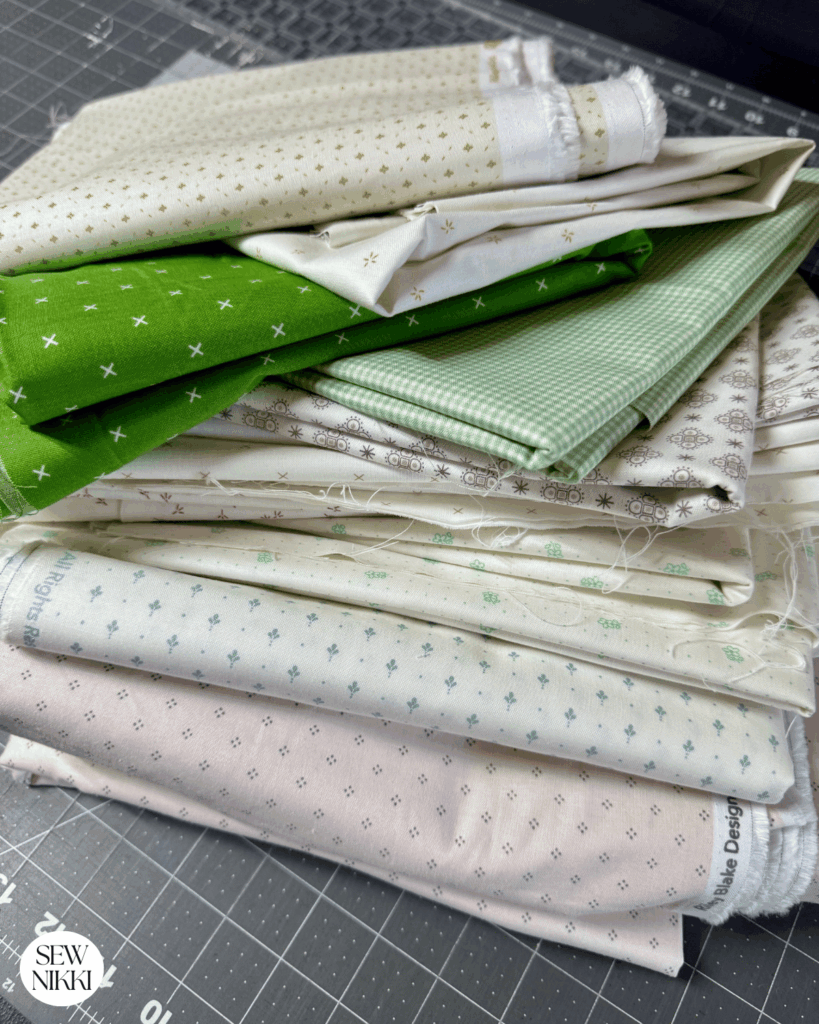
If this is your first time making a quilt, the amount of yardage can feel overwhelming. If you have been quilting a few years, you already know the panic of wondering whether you bought enough fabric or way too much. I have been quilting just over five years, and I can tell you this. Fabric math gets easier, but it never completely goes away.
Today we are breaking down fabric yardage in a practical way. We are talking quilt backing, seam allowance, width of the fabric, and how the size of your quilt top affects everything. I am also giving you following charts you can actually use, not just vague advice.
Let’s get into it.
Typical Quilt Sizes and Why They Matter
Before you calculate fabric requirements, you need to know the size of your quilt. Not the idea of it. The actual, exact measurements.
Here are the typical quilt sizes most of us use in the United States:
| Quilt Size | Standard Size |
|---|---|
| Baby quilt | 30″ x 40″ |
| Crib quilt | 36″ x 52″ |
| Twin size quilt | 70″ x 90″ |
| Full size quilt | 85″ x 90″ |
| Queen size quilt | 90″ x 100″ |
| King size quilt | 108″ x 108″ |
These are size guides, not laws. A standard bed can vary. A king-size bed might need extra width if you want it to hang over the side of the quilt more. If you are making a dust ruffle or planning to tuck it under a duvet cover, that changes things too.
The bed size, the length of the quilt, and how much drop you want all affect your required yardage.
MAKE SURE YOU CHECK THIS OUT!
Grab a copy of my free Quilt Planning Journal. It’s filled with graph paper and note pages to help you design at least 4 quilt or sewing projects! Pin in fabric swatches, photos of your finished quilts and enjoy your creative process!
How Many Yards of Fabric Do You Need for a Quilt? Let’s Stop Guessing
Let me paint the picture.
You’re standing in the fabric store. You’ve done math three times. You’re holding the bolt like it personally offended you. And you’re still thinking…
“Is this enough yardage?”
We have all been there.
So today we’re answering the question once and for all:
How many yards of fabric do you need for a quilt?
Not the fluffy answer. The real answer. With a chart you can screenshot and save so you stop panic buying and stop under buying.
Because both are problems.
How Many Yards of Fabric Do You Need for a Quilt? Fabric Yardage Chart
This chart assumes:
- 42 to 44 inch standard width of fabric
- Regular quilting cotton, not drapery fabric or upholstery fabrics
- A standard patchwork quilt
- Basic quilt backing with extra inches for quilting
| Quilt Size | Quilt Top Fabric | Quilt Backing 42″ Wide | Wide Fabric 108″ |
|---|---|---|---|
| Baby quilt | 2 to 3 yards | 1.5 yards | 1.25 yards |
| Crib quilt | 3 to 4 yards | 3 yards | 1.5 yards |
| Twin size quilt | 7 to 8 yards | 7.5 yards | 3 yards |
| Full size quilt | 8 to 9 yards | 8 yards | 3 yards |
| Queen | 9 to 11 yards | 9 yards | 3 yards |
| King-size quilt | 12 to 14 yards | 12 yards | 3.5 to 4 yards |
This gives you the best guesstimate amount of fabric for a typical quilt design with standard seam allowance and piecing.
If you are using wide fabric for quilt backing, you will need less fabric overall because you avoid piecing quilt backs with horizontal seam or vertical seam construction. That alone can save much yardage and time.
Companies like Moda Fabrics and Riley Blake Fabrics offer wide fabric options that make quilt backing easier and cleaner.
Understanding Width of the Fabric and Why It Changes Everything
Standard quilting cotton is usually 42 to 44 inches wide. That width of fabric determines how many strips of fabric you can cut, how many inch squares you can get across, and how much total length of fabric you need.
When you are calculating fabric yardage, always check:
- Width of the quilt
- Length of the quilt
- Width of the fabric
If your quilt is wider than the width of fabric, you will need to seam multiple pieces of fabric together. That means more seams, more seam allowance loss, and more math.
If you use 108 inch wide fabric for quilt backing, you avoid a horizontal seam down the back of the quilt. That is why wide fabric often costs more per yard, but saves you extra cost in frustration and time.
How Quilt Design Affects Fabric Requirements
Not all quilts use the same amount of yardage, even if they are the same size.
Your quilt design changes everything.
If you are making:
- A patchwork quilt with small inch blocks
- Large triangles
- A modern quilters style with large negative space
- Geometric patterns with precise pattern repeat
The number of blocks and size of the blocks will directly affect the amount of yardage.
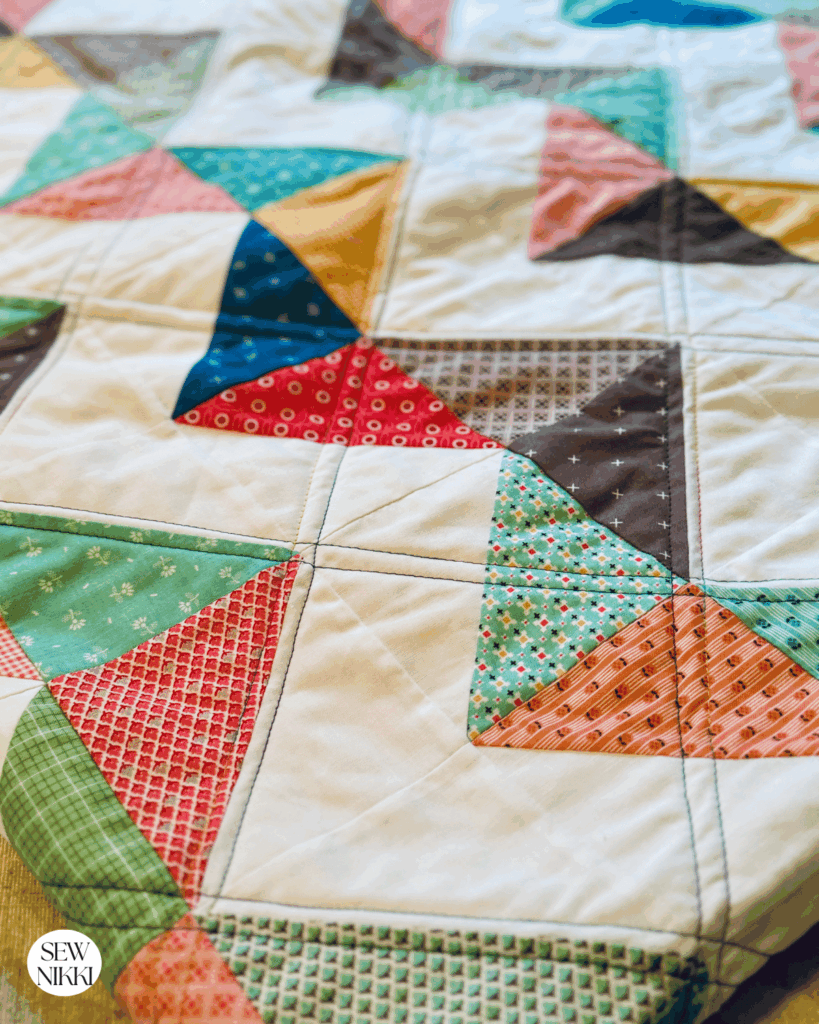
For example, a quilt made from inch squares or jelly roll strips will use many small fabric pieces. A quilt made from large 12 inch blocks may require less fabric cutting but more continuous yard cuts.
If your finished size of the block is 12 inches, but your seam allowance is 1/4 inch, you need accurate measurements when cutting. Forgetting seam allowance adds up quickly across the number of strips and total number of blocks.
Yardage for Common Quilt Sizes in Real Terms
Let’s talk specifics.
Baby Quilt Fabric Requirements
For a baby quilt around 30 x 40 inches, you typically need 2 to 3 yards of fabric for the top. Depending on your quilt design, you might use fat quarters, strips of fabric, or a layer cake.
If you are using fat quarters, remember they are 18 x 22 inches. That affects how many fabric pieces you can cut from each piece of fabric.
Backing for a baby quilt usually takes about 1.5 yards of fabric at standard width.
This is a good size if it is your first time quilting. Less fabric, less stress, and less risk.
Twin Size Quilt Fabric Yardage
A twin size quilt usually measures about 70 x 90 inches. For that size of your quilt top, expect to use 7 to 8 yards of fabric for the quilt top.
Backing with standard width of fabric requires about 7.5 yards because you will likely need a vertical seam or horizontal seam to get enough width.
If you switch to wide fabric, you can often use about 3 yards.
King-Size Quilt Fabric Yardage
A king-size quilt for a king-size bed is not playing around. For a 108 x 108 inch quilt, you will need 12 to 14 yards for the top, depending on your quilt design and borders.
Backing with 42 inch width of fabric can require around 12 yards because you are piecing multiple panels to reach the full width of the quilt.
With wide fabric at 108 inches, you can usually get away with 3.5 to 4 yards.
This is where careful planning saves you from not having enough fabric and having to hunt down a particular fabric that is sold out.
Why I Prefer Yardage Over Precuts
I started quilting with precuts. Layer cake squares, jelly roll strips, and fat quarters made it easy to dive in without thinking too much about yardage requirements.
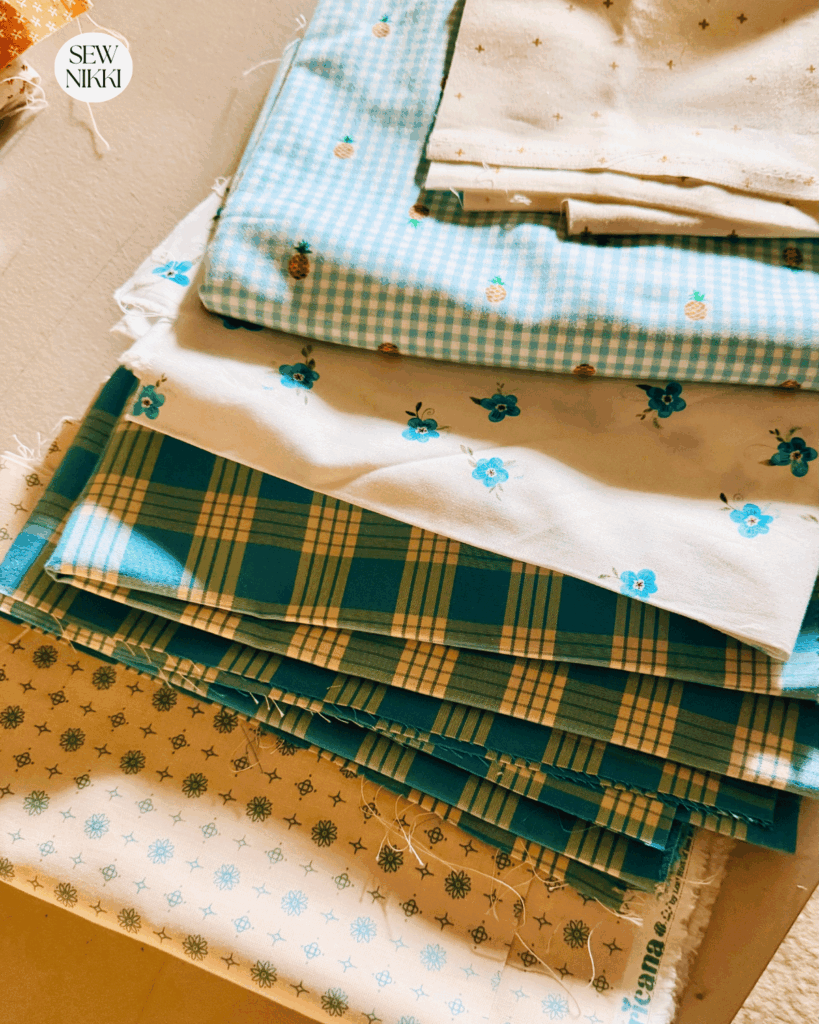
But here is what I learned.
When you buy yardage, you control your own design.
You decide:
- Size of the blocks
- Number of strips
- Width of the quilt
- Size of your quilt top
With precuts, you are locked into someone else’s measurements. If your pattern needs a wide strip and you only have jelly roll strips, you are stuck adjusting the entire quilt design.
Yardage gives you more freedom. It gives you the correct amount of fabric for your specific quilt instead of trying to stretch precuts to fit.
Precuts are convenient. Yardage gives you flexibility and personal style. This post compares precuts vs yardage if you want to see how they stack up to each other.
Calculating Fabric Yardage the Smart Way
If you want to calculate fabric requirements yourself, here is a simple step-by-step guide.
- Determine the finished size of the block.
- Multiply by the number of blocks to get total square inches.
- Add seam allowance to every side of every block.
- Multiply width of the quilt by length of the quilt to get square inches.
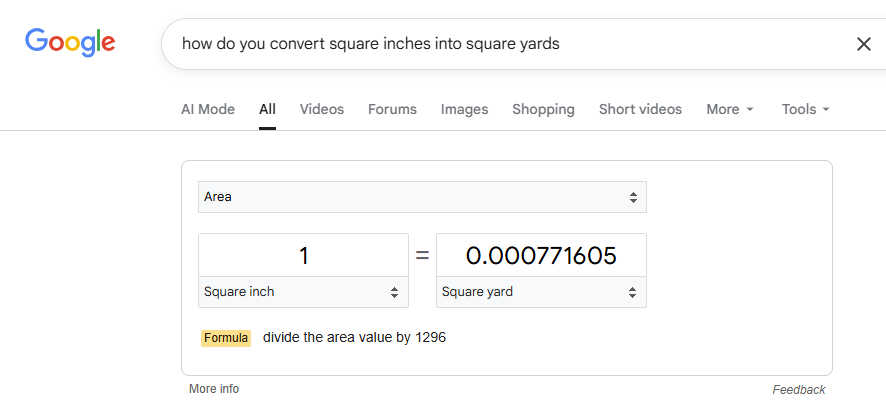
- Divide by 1296 to convert square inches into square yards.
That gives you a rough amount of yardage.
Then add extra for:
- Borders
- Pattern repeat
- Cutting mistakes
- Longarm quilter requirements
If you are sending your quilt to a long arm quilter or longarm quilter, always ask how much quilt backing they need beyond the size of your quilt top. Many require extra inches on every side.
It is a good idea to read their recommendations before cutting your quilt backs.
Here’s a fabric calculator to convert your square inches into square yards. Just type this into the Google search bar and insert your information (see below).
Special Fabric Situations
Not all fabric is created equal.
Velvet fabric, drapery fabric, and upholstery fabrics are not the best fabrics for standard quilts. They behave differently and may have a different width of fabric.
If you are making t-shirt quilts, fabric yardage calculations change because knit fabric stretches and often requires stabilizer.
If you are using a flat sheet for quilt backing, measure the total length of fabric and width carefully. Not all sheets are large enough for larger size quilts.
Always check exact measurements.
Things That Increase Fabric Usage
- Adding wide borders
- Increasing the size of the blocks
- Adding a dust ruffle
- Making a larger size than standard size
- Using large triangles that create waste when trimmed
All of these increase required yardage.
If you are unsure, it is always better to buy a little more. The extra cost of half a yard of fabric is much better than not having enough fabric to finish.
More Fabric Shopping Resources
If you want to get smarter about buying the correct amount of fabric and not overspending, these posts will help:
- Precuts vs. Yardage for Quilting
When it makes sense to buy yard cuts and when a layer cake or jelly roll strips are actually worth it. - How to Shop Like a Pro – Best Fabric for Quilts
A breakdown of the best fabrics for patchwork quilts, what to avoid like heavy upholstery fabrics, and how width of the fabric affects your quilt design. - Quilt Backing Ideas That Are Not Boring
How I piece quilt backs, when I use wide fabric, and how to calculate quilt backing without guessing. - 7 Smart Tips for Shopping in a Fabric Store & Not Overspend
My real life strategy for walking into a fabric store with a plan, sticking to your budget, and buying the right amount of yardage without regret.
These will help you shop smarter, calculate fabric yardage correctly, and make sure you always come home with enough fabric for your next quilt.
Save This Project
Pin this tutorial so you can come back to it later.

How Many Yards of Fabric: Wrap Up
Fabric yardage does not have to feel complicated. Once you understand width of fabric, seam allowance, and the size of your quilt top, the math becomes manageable.
Use the charts as a base. Adjust for your specific quilt. Think about your quilt design, number of inches, and how much material you really need.
Whether you are making a baby quilt, twin size quilt, full size quilt, or king-size quilt, planning your fabric requirements ahead of time makes the entire process smoother.
Measure twice. Cut once. Buy a little extra if you are unsure.
And then start sewing those right sides together.
Good luck.
If You’re New Here
I’m really glad you found your way here.
If you’re new to quilting, then welcome. The learning curve is fast, and yes, you’ll hit challenges. But I’ve got you.
Here’s where to go next:
- Free Pattern Index – all my free patterns in one place
- Digital, ad-free patterns – clean, printable, and beginner-friendly
- Handmade goodies – because sometimes you just want it finished
- Learn to Quilt Page – every step of making and finishing a quilt
My blog is built for the home sewist and quilter who wants to do it all themselves. With a nice but basic sewing machine and realistic expectations.
ABOUT SEW NIKKI
If this is your first time stopping by, welcome! Your place for free crochet, sewing and quilt patterns for beginner to intermediate skill levels. Want a digital pattern? We have those too! Plus tutorials to walk you through how to make each item from start to finish.
Follow me on social media (Pinterest, Instagram, Facebook and Twitter) so you get notifications when I post new patterns and tutorials.
Looking for your next quilt project? Then head on over to my free “Pattern Index”. It’s a page dedicated to all of my free patterns separated by categories for crochet, sewing and quilting.
If you prefer an ad-free printable version, head over to my shop and browse the Digital Patterns. These are instant digital downloads you print yourself.
This post contains ads and affiliate links, which means I make a small commission at no extra cost to you. While the ads may seem annoying, it helps keep this blog going. See my full disclosure here.