Best Fabric for Quilting: Solids vs Prints
If you are trying to figure out the best fabric for quilting, this is where things get real. Everyone loves picking fabric until it is time to sew it and suddenly nothing looks right, your seams show, and your blocks feel off. I have been there more times than I want to admit. Fabric choice matters way more than people think, especially when you are still learning.
This post is all about solids versus prints, what actually works for beginners, and why I still reach for prints most of the time. But I am also stepping way out of my comfort zone with a modern neutral quilt, so I am walking through that too.
Best Fabric for Quilting: Why Prints Make Life Easier
Let’s just say it straight. Small print fabrics are the best fabric for quilting when you are starting out. Not because they are trendy or cute, but because they cover up your mistakes.
When you are piecing quilt blocks, especially anything with points or angles, your seams are not always perfect. That is normal. But when you use a busy or small scale print, it hides all of that.
Think of it like this. Your eye focuses on the pattern, not your stitching.
Small prints break up seam lines, soften mismatched points, and make your quilt look more polished even if your piecing is not perfect yet. That is why most beginner friendly patterns use prints or recommend them.
Large prints are a different story. They might look amazing on the bolt, but once you cut them into smaller pieces, the design gets chopped up and lost. You end up with random chunks of a flower or shape that do not really make sense in the block.
That is why large prints are better for borders, backings, or whole cloth projects, not detailed piecing.
If you are brand new or still building confidence, stick with small prints. It makes the whole process less stressful and way more forgiving.
If you need help getting your fabric amounts right before you start, check out my post on how many yards of fabric you need for a quilt. It will save you from buying way too much or not enough.
MAKE SURE YOU CHECK THIS OUT!
Grab a copy of my free Quilt Planning Journal. It’s filled with graph paper and note pages to help you design at least 4 quilt or sewing projects! Pin in fabric swatches, photos of your finished quilts and enjoy your creative process!
Solids vs Prints in Quilting: The Honest Truth
Now let’s talk about solids.
Solids look clean, modern, and high end. They photograph well, they give that minimal look, and they are all over Pinterest. But they are not beginner friendly, and no one really says that out loud.
Solids show everything.
Every seam, every wobble and every point that did not line up.
There is nowhere to hide.
When you sew with solids, your seam allowance has to be consistent. Your cutting has to be accurate. Your pressing has to be on point. If not, it shows immediately.
That does not mean you should avoid solids forever. It just means you need to know what you are getting into.

This is why I personally have always leaned toward prints. I like quilts that feel cozy, a little scrappy, and forgiving. I do not want to stress over every seam matching perfectly when I am just trying to enjoy the process.
My Neutral Quilt Challenge: Going Against My Own Advice
Now here is where I am doing the exact opposite of what I usually recommend.
I am making a modern wedding quilt for someone who loves neutrals. No bright colors, no busy prints, just clean, soft tones.
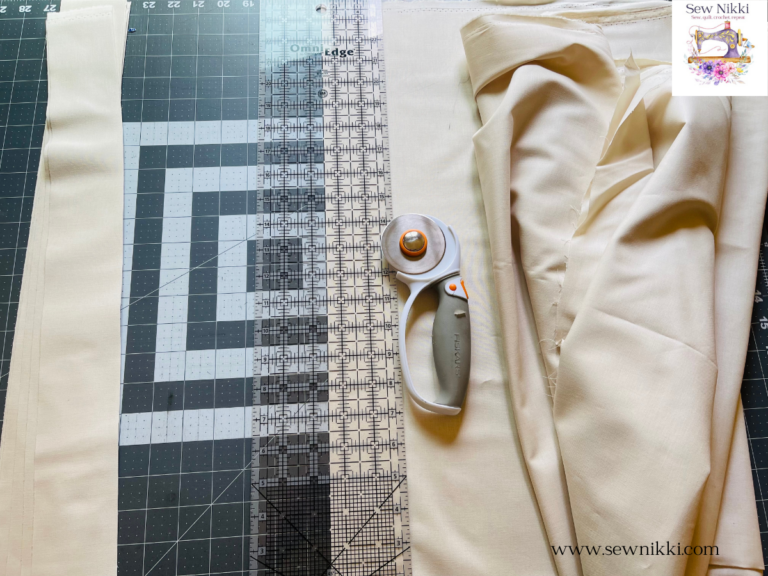
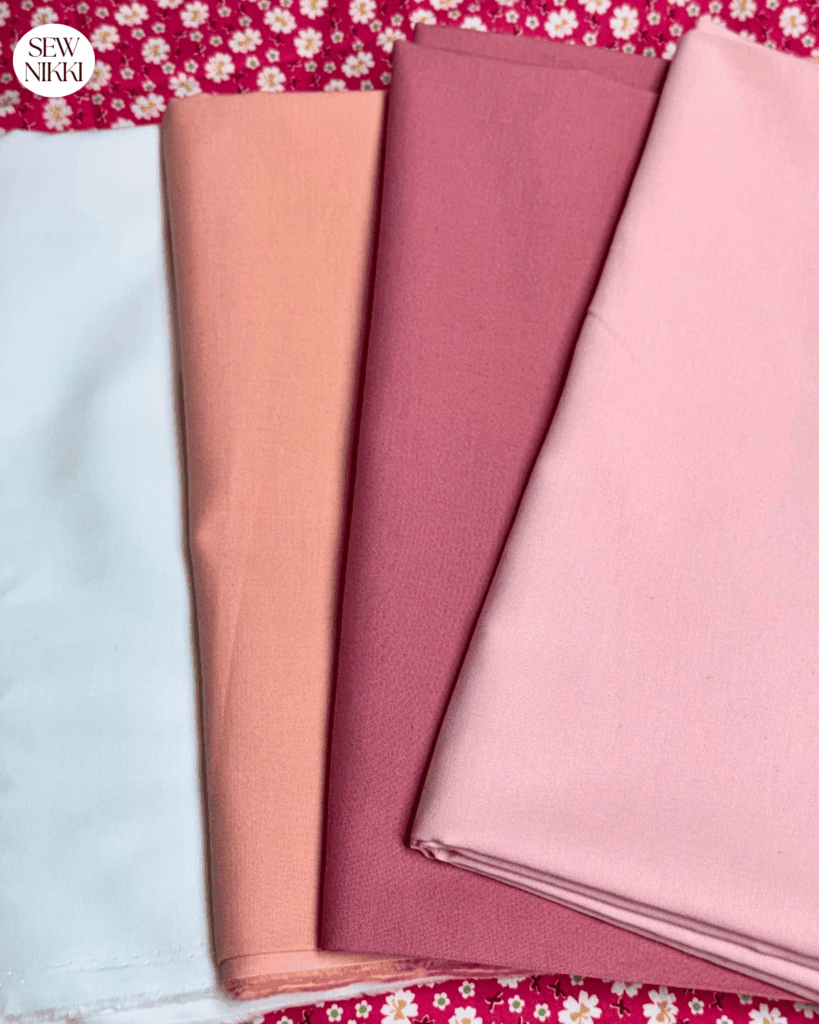
So instead of reaching for my usual stack of prints, I bought five yards of solid fabric in blush pink, burnt rose, apricot, and white. Still soft and neutral, but with a little warmth so it does not feel flat or boring.
I am not going all in yet. I am testing first.
Before I commit to buying all the fabric for a full size quilt, I am making a few test blocks using my modern sister’s choice quilt block. I want to see how the colors work together and how the seams look before I invest more money and time.
And honestly, I am a little nervous.
Solids do not give you a safety net. If something is off, you will see it right away. But at the same time, I am excited because when solids work, they really work.
Clean lines, soft contrast, and that modern look that feels intentional.
Why I Usually Choose Prints Over Solids
I have been quilting for a long time, and prints have always been my go to for a few simple reasons.
They are forgiving. You can have slightly uneven seams and still end up with a quilt that looks great.
They add built in texture. Even if your quilting is simple, the fabric does a lot of the visual work for you.

They feel more relaxed. Not every quilt needs to be perfect, and prints help keep that handmade feel.
They are easier to mix. You do not need a deep understanding of color theory to put together a stack of prints that works. Most fabric lines are designed to coordinate, so you can grab a few and go.
If you want to get better at choosing fabric without overthinking it, my post on precuts vs yardage breaks down an easy way to shop without second guessing every choice.
Why I Am Trying Solids Anyway
Even though prints are easier, I wanted to challenge myself.
This quilt is not about playing it safe. It is about creating something specific for someone who has a completely different style than mine.
Neutral solids can look calm, modern, and timeless when done right. They also highlight the quilt design itself instead of the fabric.
That is what drew me in.
I kept thinking about all those neutral and boho quilt inspiration boards on Pinterest. Soft palettes, simple layouts, and quilts that look like they belong in a magazine.
I may not have taken a color theory class, but I have definitely spent enough time studying what works visually.
So I pulled inspiration from those neutral palettes and chose fabrics that felt cohesive without being flat. The blush pink, burnt rose, apricot, and white give just enough contrast while still staying soft and minimal.
What I Am Doing Differently With Solids
Since I already know solids are less forgiving, I am changing a few things with how I sew this quilt.
Spray Starch
First, I am using spray starch. This is something I almost never do with prints, but with solids it helps a lot. It firms up the fabric and helps prevent those little wrinkles that show up next to seam lines.
You can buy spray starch at the grocery store, a quilt shop, or online through places like Amazon. You can also make your own. I have a full post on how to make homemade spray starch that walks you through it step by step.
Press Seams Open
Second, I am opening my seams as I press them. Not ironing, pressing. There is a difference.

Pressing means you hold the iron down in one spot, lift it, and move to the next area. You are not sliding it across the fabric. That is how you stretch and distort your blocks.
If you want a good visual, this tutorial from Missouri Star shows the difference between pressing and ironing and why it matters.
Press As You Go
I am also pressing my blocks as I go instead of waiting until the end. I usually do not do this because pressing locks the seams and makes it harder to nest if something is slightly off.
But with solids, I am prioritizing smooth, clean blocks over speed.
I want this quilt to look crisp, flat, and gift worthy. That means taking a little extra time at each step.
And let’s talk about wrinkles for a second. Those tiny ripples along your seam lines that you might ignore with prints will stand out immediately with solids.
If you are not sure what that looks like, look at my photo below. The ripples aren’t bad but they are noticable. That is exactly what I am trying to avoid here.

What Beginners Should Actually Choose
If you are still wondering what the best fabric for quilting is, here is the simple version.
Start with small prints.
They are easier to work with, less stressful, and more forgiving when your skills are still developing.
Avoid large prints for detailed piecing unless you are using them in a way that shows off the full design.
Be cautious with solids. They are beautiful, but they require more precision.
If you really want to try solids, start small. Make a few test blocks first before committing to a full quilt. That alone will save you a lot of frustration.
And most importantly, give yourself room to learn. Your first quilts are not supposed to be perfect.
More Resources
If you want to keep building your quilting skills, here are a few posts that will help:
How to Resize a Quilt Block & Make it Bigger
Choosing the Perfect Thread Color
For a solid visual on fabric selection and color balance, this video from Fabric Cafe walks through how to choose fabrics that work together in a quilt.
You can also watch tutorials from Missouri Star Quilt Company that break down quilting basics in a simple way.
Save This Pin!

Best Fabric for Quilting (Especially Beginners)
I still believe small prints are the best fabric for quilting when you are starting out. They make the process smoother and a lot less frustrating.
But sometimes you want to try something different, even if it feels a little risky.
That is where I am at right now with this neutral solid quilt. A little nervous, a little excited, and hoping my test blocks turn out the way I see them in my head.
If they do, I will go all in. And if not, I will probably go back to my stack of prints and pretend this never happened.
If You’re New Here
I’m really glad you found your way here.
If you’re new to quilting, then welcome. The learning curve is fast, and yes, you’ll hit challenges. But I’ve got you.
Here’s where to go next:
- Free Pattern Index – all my free patterns in one place
- Digital, ad-free patterns – clean, printable, and beginner-friendly
- Learn to Quilt Page – every step of making and finishing a quilt
My blog is built for the home sewist and quilter who wants to do it all themselves. With a nice but basic sewing machine and realistic expectations.
ABOUT SEW NIKKI
If this is your first time stopping by, welcome! Your place for free crochet, sewing and quilt patterns for beginner to intermediate skill levels. Want a digital pattern? We have those too! Plus tutorials to walk you through how to make each item from start to finish.
Follow me on social media (Pinterest, Instagram, Facebook and Twitter) so you get notifications when I post new patterns and tutorials.
Looking for your next quilt project? Then head on over to my free “Pattern Index”. It’s a page dedicated to all of my free patterns separated by categories for crochet, sewing and quilting.
If you prefer an ad-free printable version, head over to my shop and browse the Digital Patterns. These are instant digital downloads you print yourself.
This post contains ads and affiliate links, which means I make a small commission at no extra cost to you. While the ads may seem annoying, it helps keep this blog going. See my full disclosure here.