Why Discounted Yardage is the Best Fabric for New Quilters
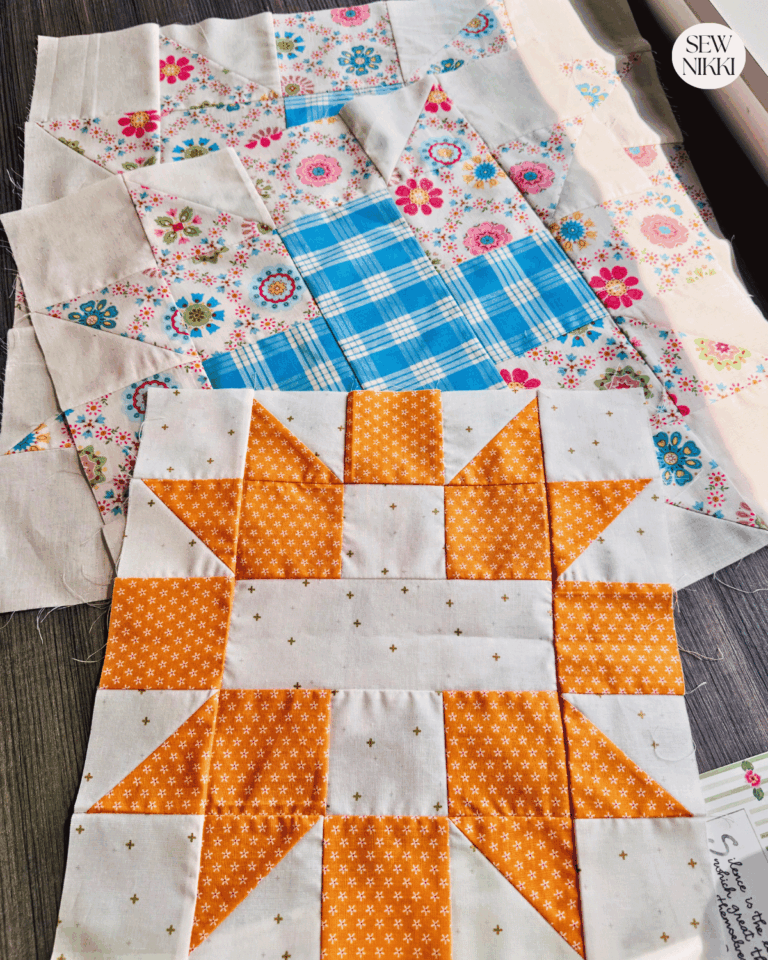
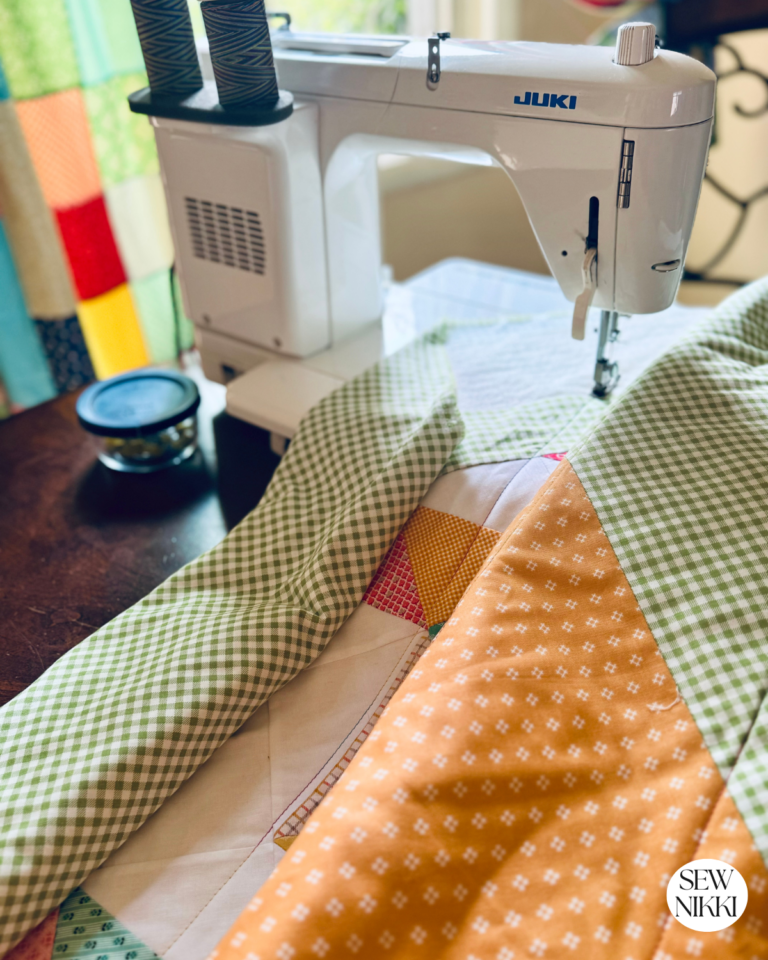
The best fabric for new quilters is quilting cotton by the yard that is discounted by being dead stock, off the bolt or discontinued. The quilting world pushes expensive precuts and new yardage lines hot off the presses but let me tell you why discounted yardage is so much better. Don’t practice on expensive high end fabrics or precuts, let me show you a better option. Less intimidating and easy on your wallet.
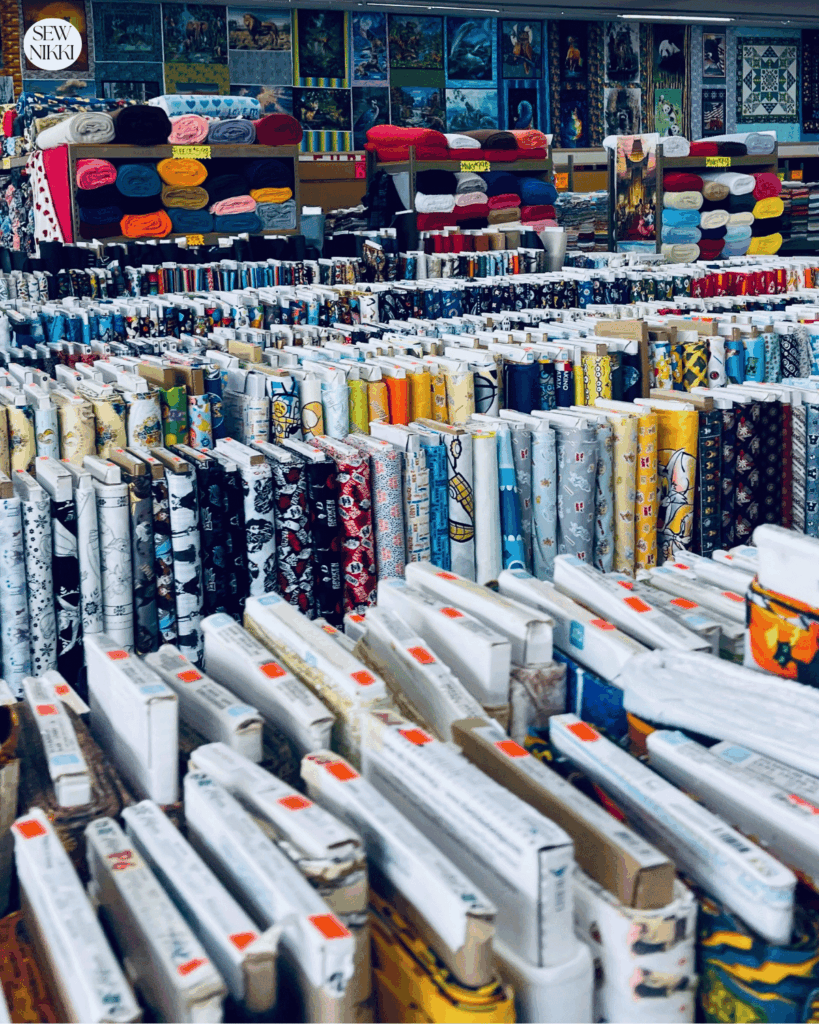
Precuts are convenient, pretty and good for your first quilt. Yardage gives you greater choice, more flexibility, and more fabric for your money. Especially when you buy the yardage at discounted prices.
It is easy to think that you should buy the exact same fabric that the popular pattern designer is using. Especially when you see beautiful quilts made with high quality fabrics from the latest collections.
Break that way of thinking right now and never be afraid of cutting into your fabric again for fear you will make a cutting mistake. You wouldn’t drive a Rolls Royce for a first car, so you don’t need the most expensive fabrics for your first quilt. You just need fabric for your project that’s affordable and you aren’t afraid to cut it.
MAKE SURE YOU CHECK THIS OUT!
After you read this post, check out Learn How to Quilt for Absolute Beginners. It’s jam packed with information to make your first quilt. It also has links and resources that are so helpful when you’re first learning. There’s lots of free quilt patterns that are great for beginners and all skill levels too. So make sure you check this out, seriously don’t forget!
I made a free Quilting for the Seasons Calendar to help you plan your quilts around holidays and special occasions. It tells you when to begin a seasonal quilt so you can use it when the season arrives. Print it and keep it in your sewing room, planner or quilt notebook.
The Best Fabric for New Quilters
So I always recommend new quilters to make their first quilt with precut charm squares. Two packs can be a basic baby quilt. It lets you get right into sewing and all the other steps.
After your first quilt, start cutting your own fabric pieces with yardage. Why? Because cutting your own fabric is a part of quilting so learn how to do it right from the start of your quilting journey. Learn how to cut accurately with your rotary cutter, cutting mat, and straight quilting ruler.
You’ll want a fabric that is sturdy but not stiff or heavy. 100% quilting cotton bought in yards is an excellent place to start.
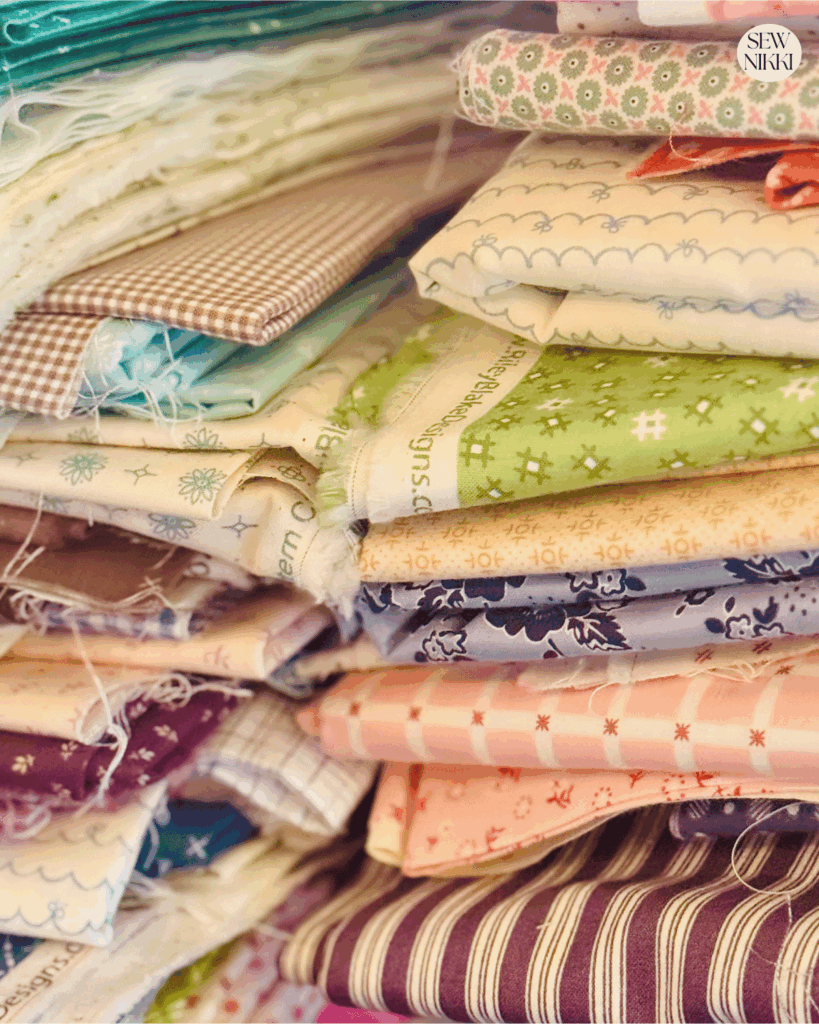
You won’t need special kinds of fabric or the most expensive type available at the quilt shop. Or a bundle of fabric containing all the coordinating prints from the collection. All you need is some fabric that you are at ease with cutting. Especially when you are first learning to use a rotary cutter and becoming used to taking accurate measurements.
Avoid Expensive Fabric for New Quilters
Let’s consider the frightening aspect of quilting, cutting up the fabric. A rotary cutter seems extremely easy to use when you watch someone who has been quilting for a long time. Just place the ruler on the fabric and run the rotary cutter along the edge. You instantly end up with a perfectly straight piece of fabric.
But it isn’t always so when you are learning. It does take practice to get accurate cuts with a rotary cutter. You have to learn how to hold the ruler and apply sufficient pressure to it. Making sure the ruler doesn’t move as you cut while keeping all your fingers in tack.
Then you have to position the fabric correctly and manage to make a clean cut without accidentally shifting the material. A certain amount of practice is needed before you feel confident.
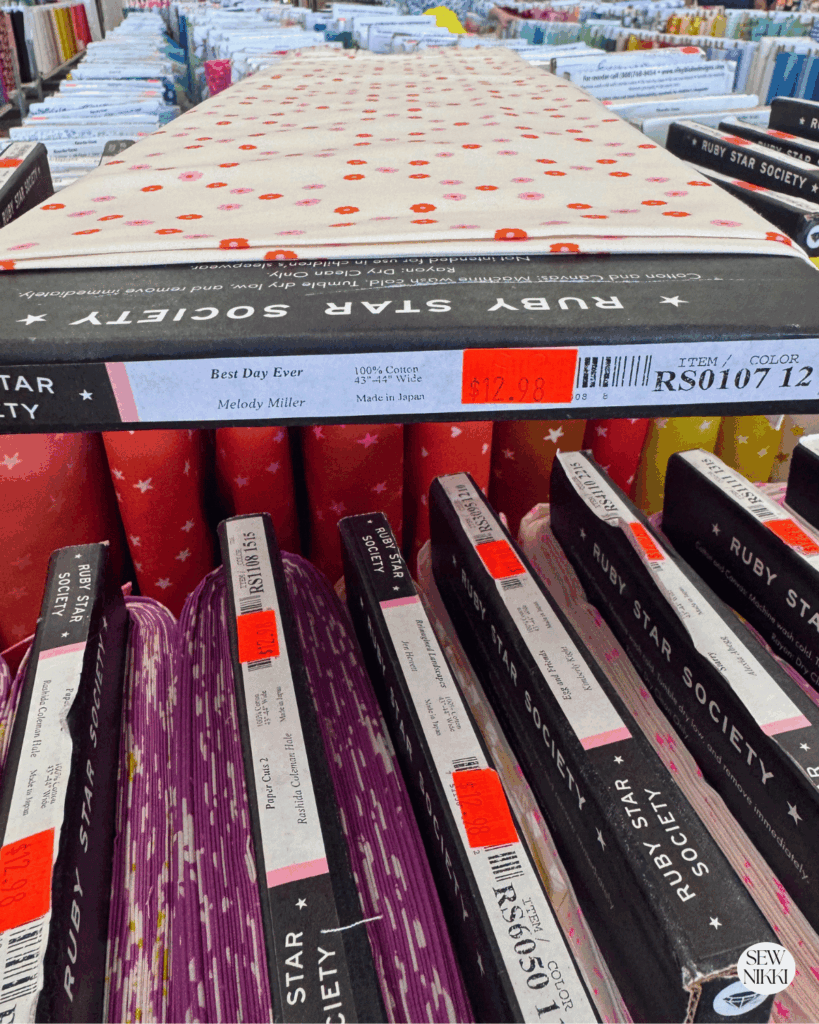
There’s also the psychological aspect of making the first cut in expensive fabric. I always hesitate when I’m looking at pricey fabric that costs $14, $16 or even more per yard. Afraid I will cut it wrong and waste the fabric. That’s why I recommend the less expense fabric. Still good quilting cotton but less afraid to cut it and make a mistake.
That is the reason why discounted fabric should be your best option when you are getting started. You should buy the correct kind of fabric, but there’s no need to purchase the most expensive one. Your goal should be to develop your skills and confidence while making an item that you can actually use.
Yardage Is The Best Fabric for New Quilters
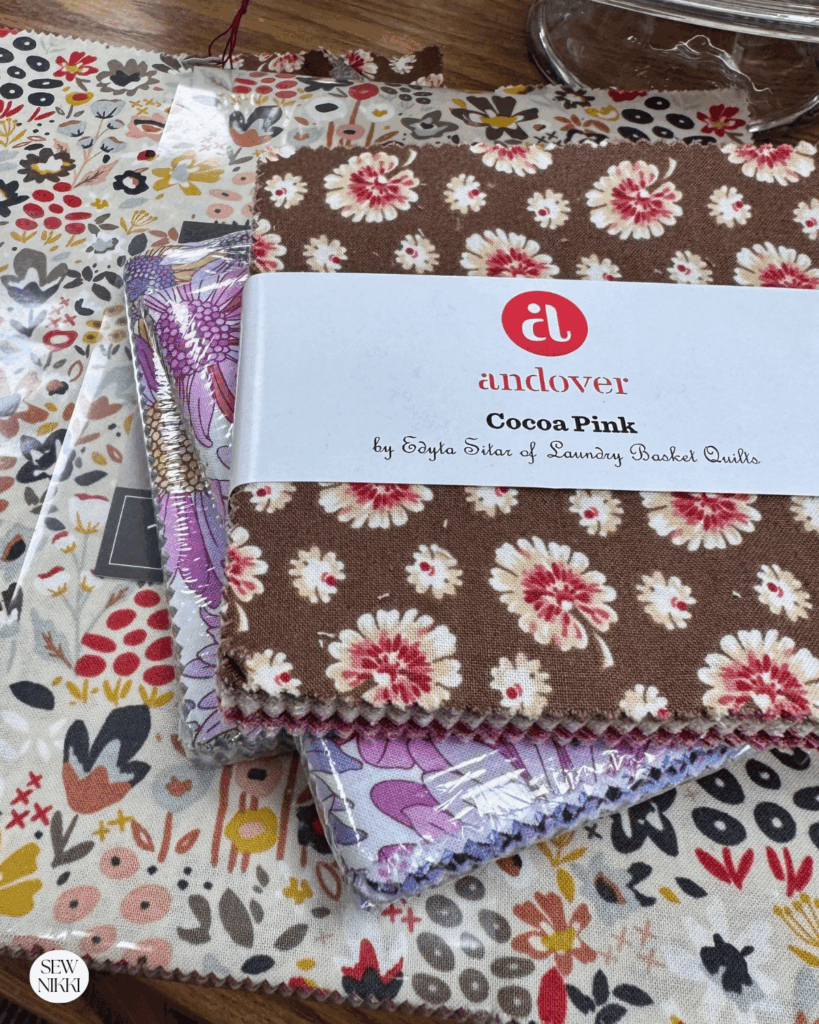
It’s commonly said that precuts are the easiest method for people who are just starting out with quilting. There’s some merit to that statement. Charm packs are great for your first quilt since the fabric is already cut up into 5 inch squares. You can skip some of the cutting and go straight to sewing, which makes your first quilt less overwhelming.
Trouble arises when you think that precuts are the best choice for all quilts. When you begin to make various quilt blocks and realize a 5 inch square isn’t suitable for all the steps. Your pattern might require a 6 inch square, , a 2 1/2 inch strip, or a much larger piece for the border or the backing.
It’s not possible for precuts to offer that level of flexibility. Flexibility can be had with fabric yardage.
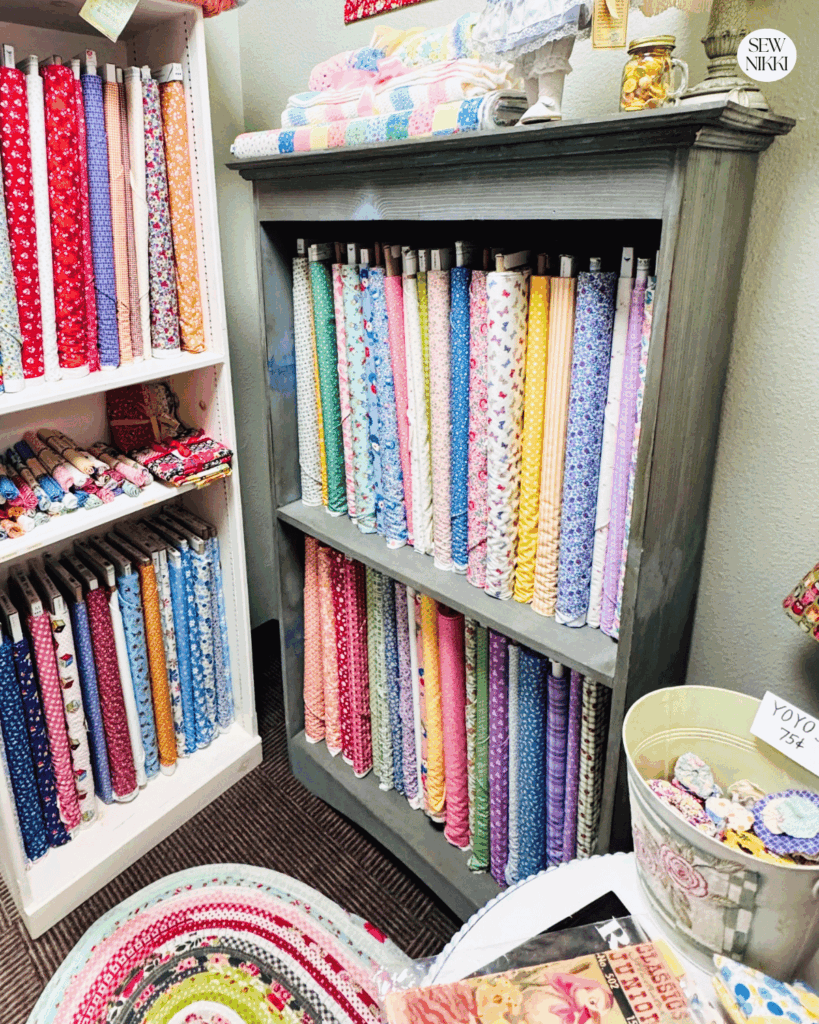
If you purchase fabric in the length of a bolt you can cut out the exact pieces that your pattern calls for and you can make larger quilt blocks, borders, sashing, quilt backings and bigger pieces for home decor projects. You also have greater freedom if you want to alter a pattern or create your own design.
One of the main reasons why I prefer yardage is that it offers a great deal of flexibility, particularly when a new quilter goes beyond their first practice projects.
Precuts Cost More for a Reason
There is by no means anything wrong with precuts, and I continue to use them for some of my quilting projects. What new quilters need to realize is that they are paying for convenience and for all the fabric to go with each other. The down side is that you will not like every fabric in the bundle and your limited to certain block patterns due to size of precut.
What about charm packs and layer cakes?
It can also be quite difficult to locate precuts in a local quilt shop or in a fabric store, particularly if you’ve decided on a specific collection. You might find the ideal fabric on the internet only to find that the charm pack is sold out, even though the yardage is still available. You may eventually come across the precuts elsewhere, but you could end up having to pay a lot more for them.
If you are buying yardage, you have a lot more choice. All you have to do is go to a fabric shop, select a quilting cotton that you like, and then buy the amount that you need rather than looking for a particular precut.
What about fat quarters?
After charm packs and layer cakes, fat quarters are my preferred kind of precut for new quilters since a fat quarter is a piece of fabric that measures a quarter yard and is cut to be about 18 by 22 inches and provides more usable fabric than a charm square or layer cake.
Fat quarters are very useful for quilt blocks, for small sewing jobs, for baby quilts, for wall hangings, and for scrappy quilts. They are also a good choice when you want many different prints without having to buy a full yard of each fabric.
If a quilt specifically requires fat quarters, then by all means use them since they are an ideal option for some patterns and do make choosing the fabric much simpler. However, do not suppose that every quilt needs fat quarters just because the pattern calls for yardage.
What about Jelly Rolls?
Jelly rolls are also a popular type of precut, consisting generally of strips that are 2½ inches wide taken from a fabric collection. They are especially suitable for some quilt patterns, particularly those which involve strip piecing.
Just like with other precuts, the main benefit is convenience since the strips have already been cut and are ready to use, which can save you time and speed up some quilting projects considerably. The disadvantage is the cost of convenience and you won’t like every fabric.
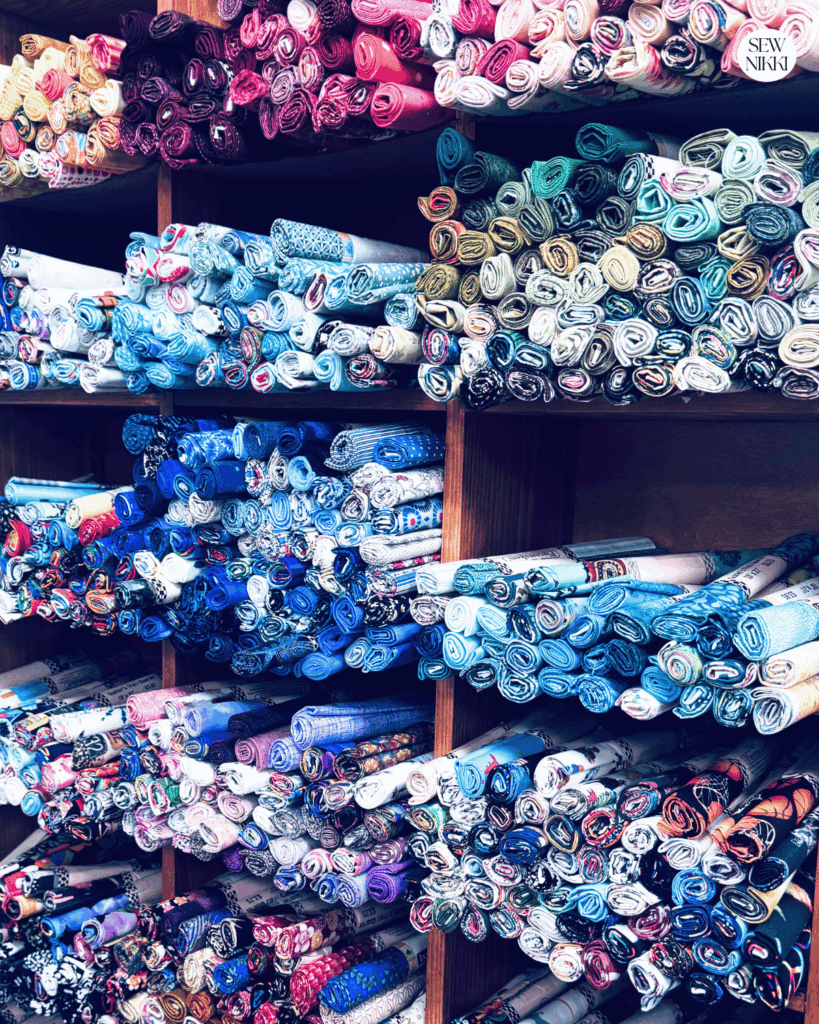
When you are used to using your rotary cutter and quilting ruler, then you can purchase fabric by the yard and cut your own strips. This enables you to have greater control when choosing your fabric and means that you can buy only the colors and prints that you really want.
Type of Fabric to Buy
Stick to cotton fabric for quilting, specifically quilting cotton. It has a tight weave, a smooth surface, and sufficient body so that it doesn’t feel thin or stretchy.
Cotton used for quilting is usually made with a specific purpose in mind — of being used for quilting and sewing — and as a result is a suitable option for people who are just starting out. While apparel cotton can be light and comfortable, it might have a more loosely woven structure or react differently when you cut and sew it.
That doesn’t imply that cotton or other various materials are bad, it only means that they might not be the best choice when you’re learning accurate cutting and piecing. Cotton suitable for quilters is the most commonly used material for a very good reason.
Does thread count make any difference?
Honestly, I’ve never even thought about thread count with the yardage for my quilts. But my hand can feel a thin cotton versus a thicker cotton, go for the thicker cotton. It provides for stability under your sewing needle. Although a high thread count can result in a tighter weave and a smoother, more durable fabric, thread count alone does not determine whether a fabric is suitable for use in quilting.
For those who are starting out, you should focus on how the fabric actually feels and performs. You need to look for one that has a steady, dense weave and doesn’t stretch when you gently pull it; it should have the feel of being able to withstand cutting, sewing, pressing and handling without getting distorted.
It is not necessary for good quality cotton fabrics to be the most expensive ones available in the store, since there are many high quality fabrics at reasonable prices, particularly when you buy during sales.
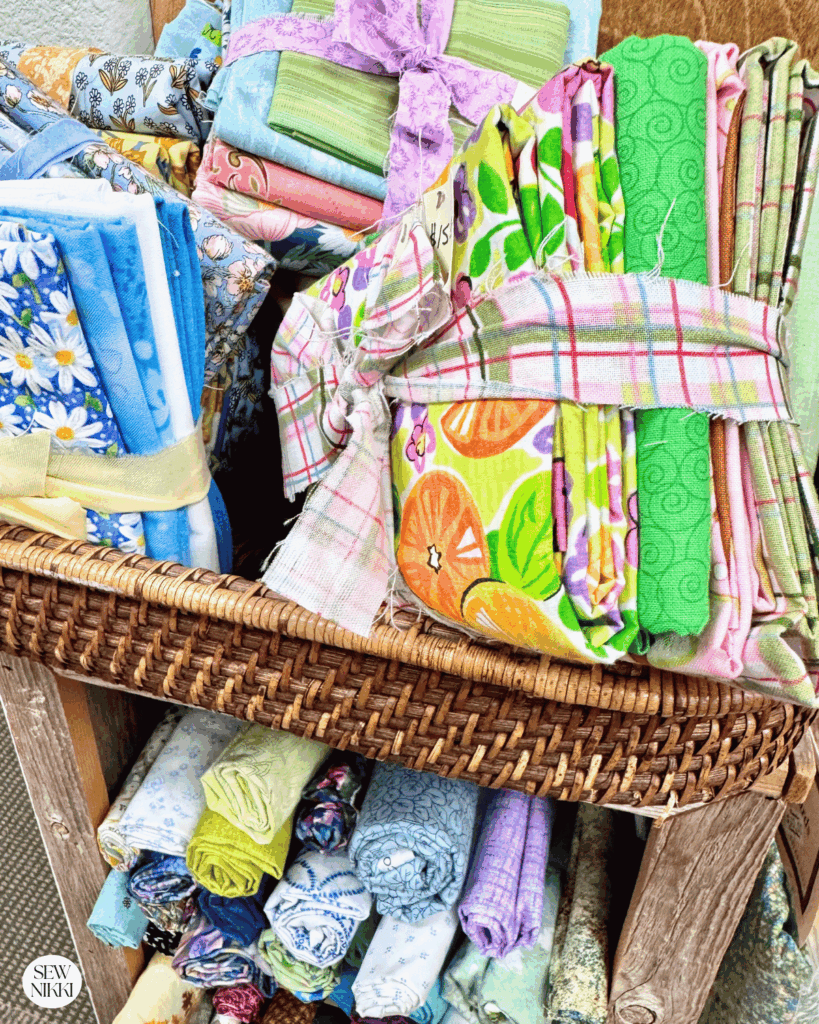
What About Batik Fabric?
Batik fabric is pretty and can be a great option when quilting. It’s generally made from cotton and tends to have bright colors and detailed patterns, which can make a quilt very visually attractive.
Should you come across a batik that you like and that suits your project, then by all means use it. On the other hand, if you are still getting used to cutting accurately and sewing a consistent seam allowance, inexpensive quilting cotton might be the better choice.
It’s perfectly all right to hold on to those specialty fabrics until you’re more confident with your rotary cutter and sewing machine.
What About Flannel?
Flannel is suitable for making attractive quilts, particularly those used in the winter, cozy blankets, and baby quilts. Although cotton flannel is soft and warm, it is different from ordinary quilting cotton.
Because flannel is able to stretch and shift more easily, it can make accurate piecing a bit more difficult for a beginner quilter, and it also produces more lint when you are sewing, so you should bear that in mind if you’re using your sewing machine.
If you are making a flannel quilt then pre-washing the fabric may help to avoid problems caused by shrinkage. You should use cold water and adhere to the manufacturer’s care instructions before you cut the fabric.
What About Linen?
Linen and quilter’s linen have become very popular in modern quilting. Linen may be pretty, but I wouldn’t advise anyone who is just beginning with quilting to try it. Since natural fibre fabrics differ from ordinary quilting cotton, and as some linen fabrics have a more relaxed weave, it can be more difficult to cut and assemble them accurately.
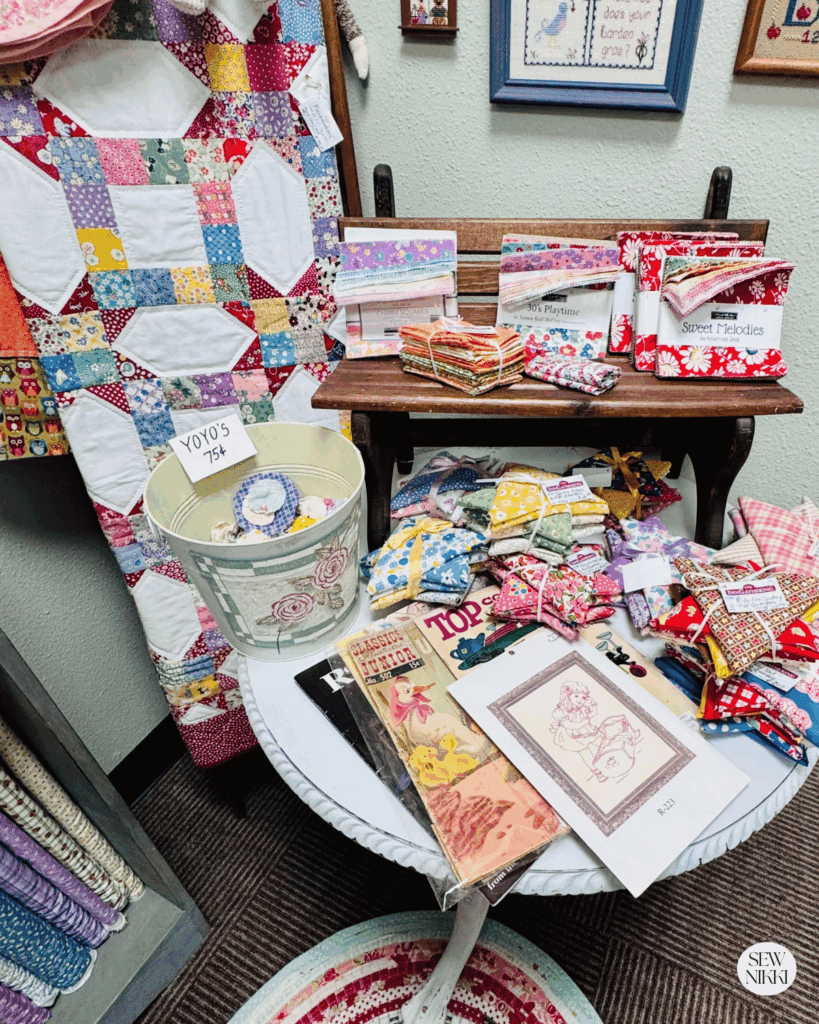
When you have made a few quilts, having a go with different kinds of fabric can be rather enjoyable and at that point you can begin to try out special fabrics and various materials without being so concerned about how they will behave.
Where to Buy Fabric
When you are looking for quilt fabric there are a number of good choices. A local fabric store is the best choice. You can touch it, see the colors yourself and have staff available if you have questions or need help. I’ve gotten great advice and ideas from fellow quilters shopping in the aisles too!
Types of Stores
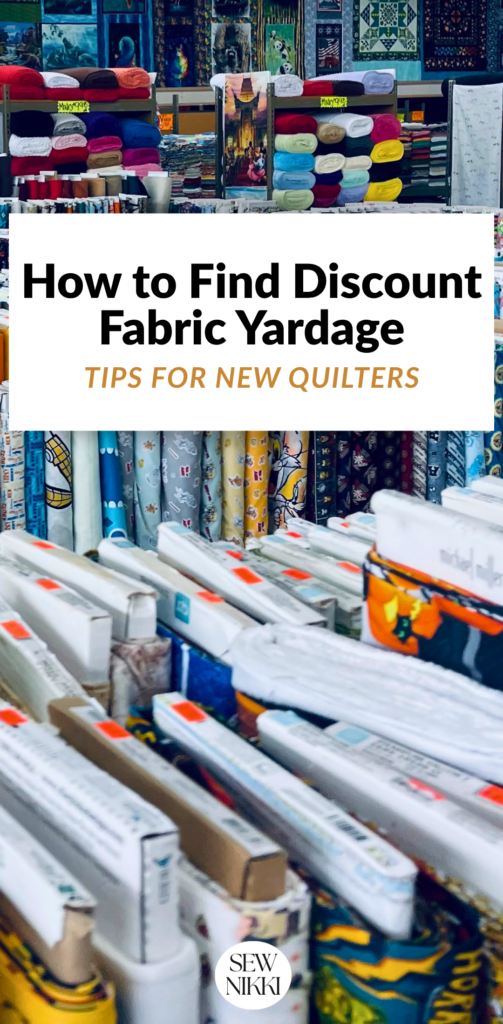
Fabric stores will most likely have discount racks with quality fabric at discounted prices. Your local quilt shop probably won’t. You may have to do your research and check out a few fabric stores to find one with quilting cotton and notions. Google fabric stores and start your search, drive to the stores to check them out in person.
Large craft stores will also carry quilting cotton but the selection will be smaller than a full fledged fabric store. A major benefit is that you can see the fabric face to face and compare the prices. You can also find fabric occasionally on sale or clearance yardage. Best fabric selection will be at a fabric store depending on where you live and what’s available.
You can find a huge variety of fabrics online and it’s easy to locate high quality quilting fabric from brands like Moda Fabrics, Robert Kaufman, Riley Blake Designs, Ruby Star Society, and Tula Pink. Fat Quarter Shop is also a good option if you want to look around at the quilt fabric and precuts that are currently available.
One disadvantage of shopping online is that you cannot feel the fabric before you make your purchase. When you are considering a new online shop, it might be a good idea to begin with a smaller purchase rather than ordering a large quantity of fabric.
My Favorite Beginner Fabric Shopping Trick
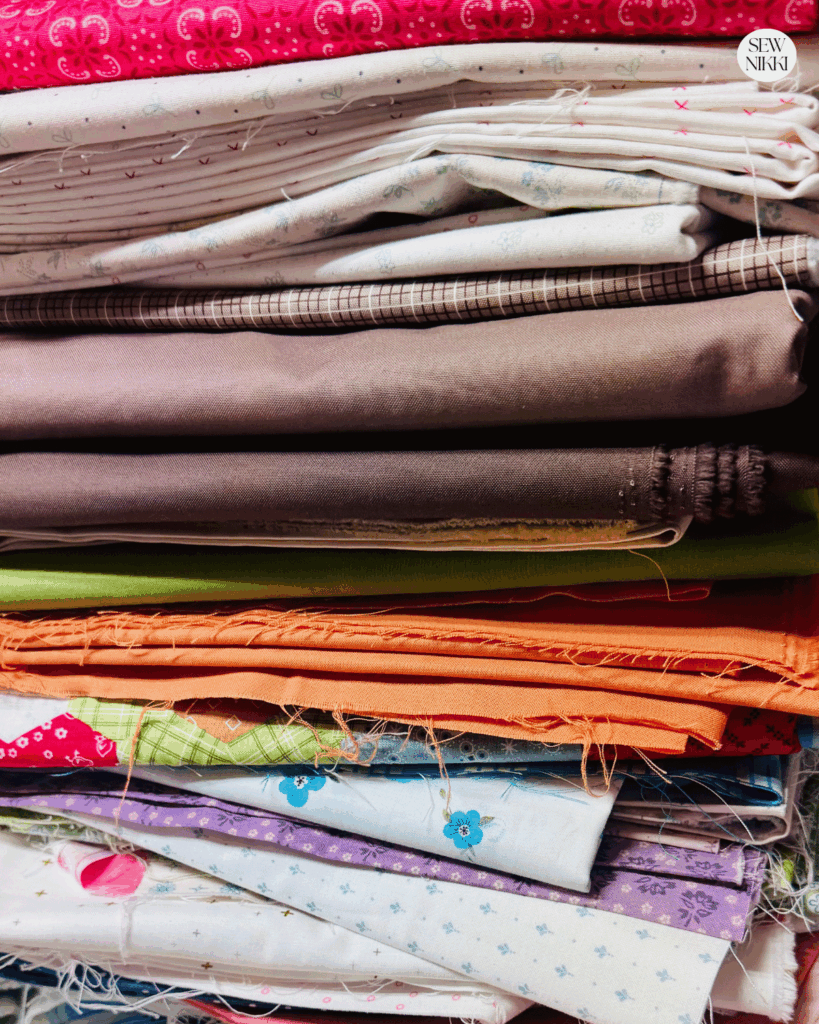
My preferred method when acquiring fabric while you are learning is to buy discounted yardage. You should look for dead stock, clearance fabric, discontinued collections, or fabric sold off the bolt at a discount.
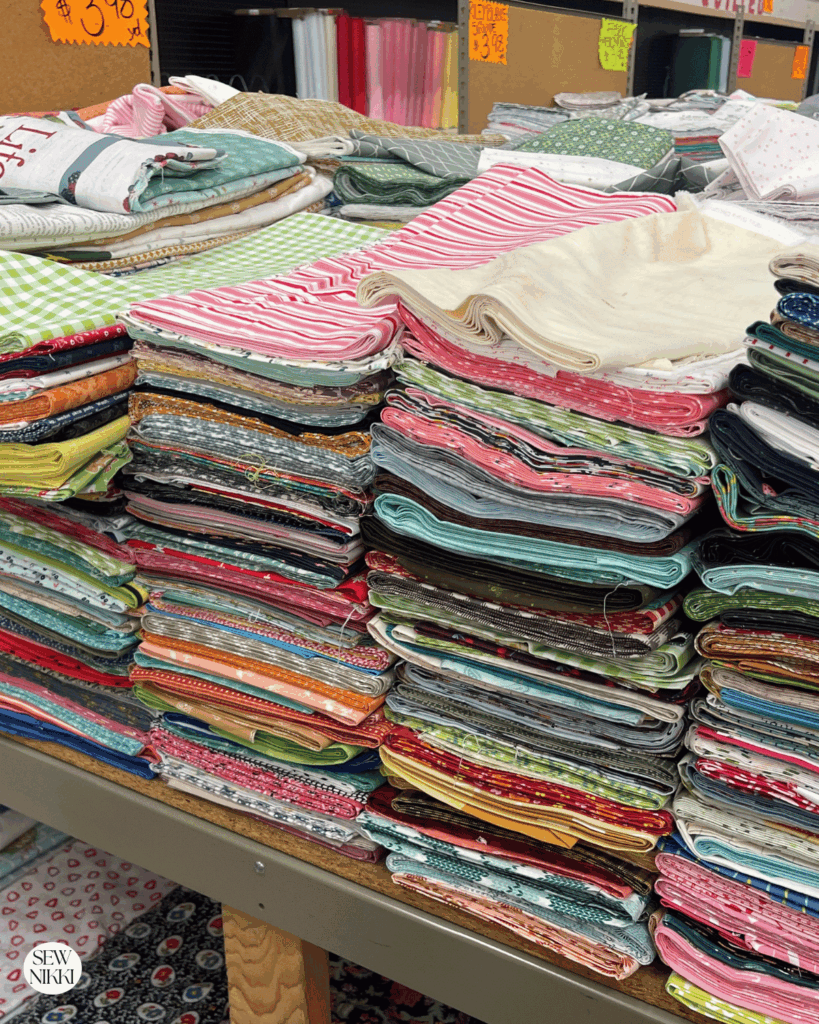
For a new quilter there is a big difference between using $4 fabric and using $18 fabric since the cheaper fabric takes some of the pressure off and this can make a great difference to your confidence.
The more you cut, sew, press and repeat, the more at ease you will become. At last, you’ll be able to purchase the beautiful, high quality quilting fabric which you’ve been admiring and cut it into without having to stare at it for twenty minutes first. This is when you know that your quilting confidence has arrived.
More Resources You May Like
- Best Fabric for Quilting – How to Shop Like a Pro!
- Best Fabric for Quilting – Solids vs Prints
- 7 Tips To Avoid Overspending in a Fabric Store
- Precuts vs Yardage for Quilting
- Quilt Backing Ideas – Thrifted, Pieced and Recycled
- How Many Yards of Fabric Do You Need for a Quilt?
The Best Fabric for Your Next Quilt
After you have grasped the basic principles, choosing the right fabric becomes a lot simpler. Rather than wondering which fabric you are meant to buy, you should begin to consider what kind of fabric will be most suitable for the particular quilt project you are undertaking.
When making a baby quilt, quilting cotton is a good option. For a winter quilt, cotton flannel might be a suitable choice. In the case of a modern quilt, quilter’s linen could provide the texture and appearance that you’re looking for. And when you’re making a scrappy quilt, fat quarters or yardage from your stash will work very well.
No single fabric is suitable for all quilts. The best choice is the one that matches your pattern, your skill level, and the effect you are aiming for. With increasing experience, you’ll become more at ease when using a variety of fabric types and materials.
Don’t Let Fabric Selection Stop You From Quilting
Beginners can take a tremendous amount of time attempting to select the ideal fabric, particularly when they see beautiful quilts on line and want their first quilt to look just as nice. I fully understand that feeling, but your first quilt is also an opportunity to gain practice.
The second quilt will teach you a new lesson and the following project is likely to make you question the reason you had carried out a particular action on your first quilt. That is the way things work in quilting. You learn through cutting, sewing, making mistakes, correcting them and then trying once more.
You can’t develop confidence as a quilter by purchasing the best materials, only by using them.
Begin by selecting good quality quilting cotton, choose one that you prefer, and look out for discounted yardage each time you have the opportunity. Most important of all, pick a fabric that you wouldn’t hesitate to cut. The best fabric is not the one that remains unused on your shelf; it is the fabric that ends up becoming a quilt.
If You’re New Here
I’m really glad you found your way here. If you’re new to quilting, then welcome. The learning curve is fast, and yes, you will face challenges. But I’ve got you. If I can do it, so can you!
Here’s where to go next:
- Learn to Quilt – helps beginners grasp the basics without making quilting seem complicated
- Free Pattern Index – free patterns that are suitable for beginners and intended to help you develop your skills while at the same time making something that you will actually want to use
- Digital Patterns – To make quilting easy so you spend less time concerned about doing it right and more time actually quilting
My blog is built for the home sewist and quilter who wants to make a quilt from start to finish all by themselves. Take a full tour of this blog so you know your way around. Subscribe to the newsletter so you don’t miss out on new patterns or tutorials. And follow me on social media (Pinterest, Instagram, Facebook and Tik Tok).
Frequently Asked Questions
What fabric is best suited for new quilters?
Quilting weight cotton is the best all-round option for new quilters since it has a stable weave, is easy to sew, is available in a huge range of colours and prints, and is also easy to find – it is suitable for most beginner quilting projects.
Should people who are starting out purchase precut fabric?
For certain beginner projects, pre-cut pieces such as charm packs and fat quarters are a good choice since they save you some of the cutting time. On the other hand, buying fabric by the yard gives you a great deal of flexibility and can be less expensive per yard.
Is quilting cotton better than regular cotton?
Cotton used for quilting is usually the better option when making quilts since it is made for this purpose and has a stable weave. Cotton used in clothing, on the other hand, can be lighter, softer, or have a more loose weave, which makes it harder to use when doing accurate quilt piecing.
Is it true that expensive fabrics are better for use in quilting?
It does not have to be so. Although high-quality fabrics can be very good, it is not necessary to use expensive fabric in order to make beautiful handmade quilts; discounted quilting cotton is a good option when you are getting started since you can practice without the worry of wasting costly fabric.
Is it necessary to wash quilting fabric before using it?
Opinions vary as to whether quilt fabric should be prewashed. If you do decide to prewash it, then use cold water and adhere to the manufacturer’s care instructions. The main point is to keep consistent with the fabrics you use in the same quilt.
What kind of fabric should I use for the back of a quilt?
Cotton can be used as a backing for a quilt, but you might need more than one piece depending on the size of the quilt; wide backing fabric is also an option when making large quilts and it will prevent you from having to piece together several sections.
Best Fabric for New Quilters
The best fabric for new quilters is cotton in quilting weight sold by the yard. Precuts have their uses. Charm packs are excellent for your first quilt. But after one or two, learn to cut fabric and getting used to rotary cutter and ruler. Keeping ruler steady to make accurate cuts.
Fat quarters are useful when working on scrappy projects and you don’t know how to match fabrics yet but learn to give you more freedom with your quilt designs. And jelly rolls can make some patterns simple and easy.
Do not let the quilting world lead you to think that you have to have a set of perfectly coordinated bundles of fabric before you can begin quilting. Just buy the correct fabric, buy fabric you can afford to practice with and choose something you actually like.
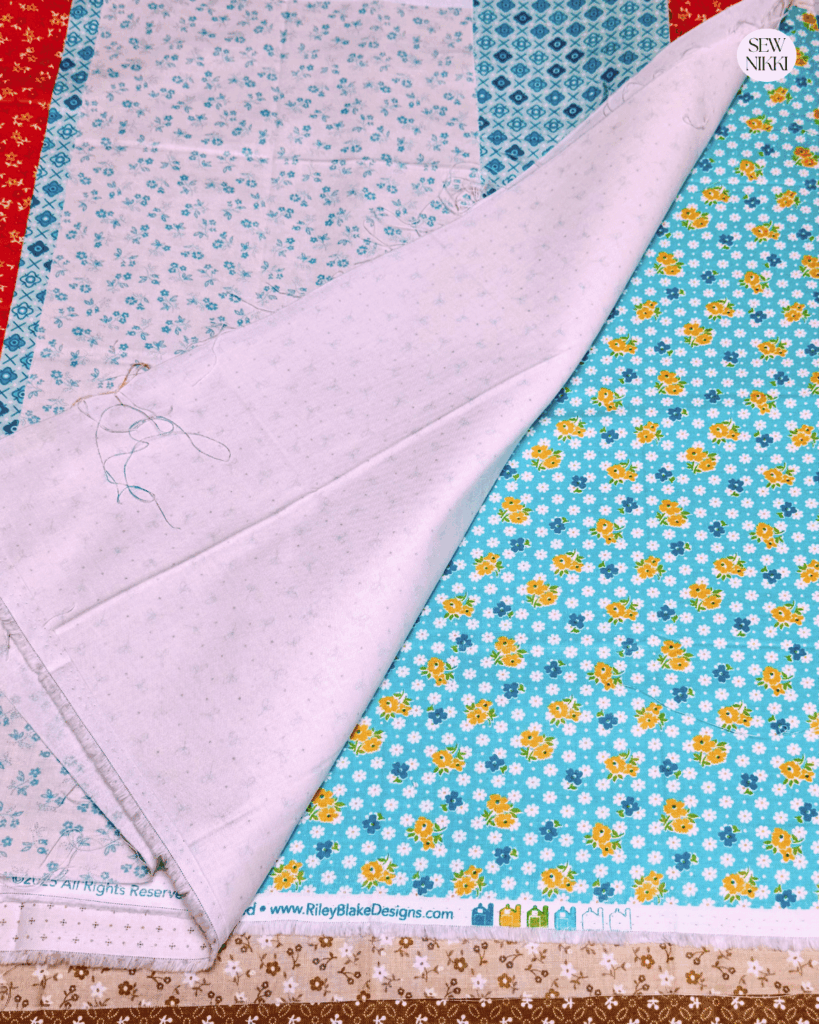
Most importantly, just buy fabric you aren’t afraid to cut. That means fabric that’s good quality but doesn’t cost a lot. Once you get comfortable with your rotary cutter, ruler, sewing machine, and your seam allowance, you’ll have the confidence to try more fabrics, more patterns, and more complicated quilt blocks.
Your first quilt doesn’t need to be perfect. It just needs to get you ready for the next one.
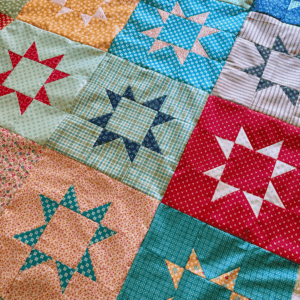
Beginner Quilt Patterns Using Yardage
About Sew Nikki
I am a California quilter who loves making quilts without making quilting feel harder than it needs to be. Here at Sew Nikki, I share free quilt block tutorials, quilting tips, beginner projects, free patterns, and digital quilt patterns.
I believe quilts do not have to be perfect to be worth making. Sometimes a point is a little off or a seam does not line up exactly. That is part of quilting.
This post contains ads and affiliate links, which means I make a small commission at no extra cost to you. See my full disclosure here.